


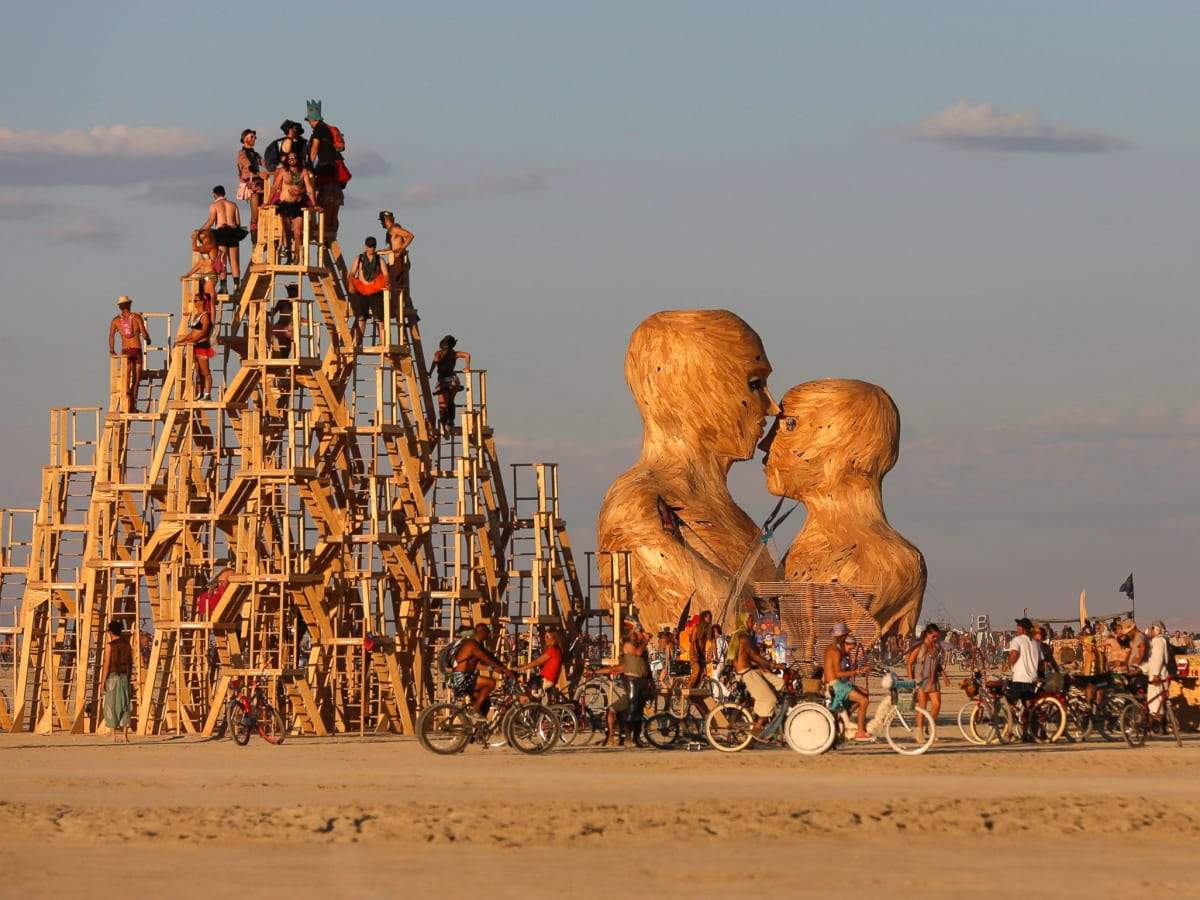
the Burning Man Project’s art installations of 2026
Take a look inside the art that transformed Black Rock City in 2026.
Burning Man is much more than a festival with cool art installations. Art and creative participation are just a part of the foundation of what Burning Man is.
Burning Man began in 1986 on Baker Beach in San Francisco with a small group of friends who gathered to burn an eight-foot wooden figure. Over the next several years, the gathering grew and became intertwined with San Francisco’s underground art scene, particularly the Cacophony Society, a loose community of unconventional artists.
In 1990, authorities prevented the group from burning the Man on Baker Beach. Members of the Cacophony Society suggested bringing it to Nevada’s Black Rock Desert, where it was burned later that year. The move became enormously important to the evolution of Burning Man. The wide-open desert offered artists an almost limitless canvas.
The desert changed the relationship between a person and an artwork. Rather than simply observing art from a distance, the artwork becomes part of the experience. Attendees can approach installations from across the playa, walk around them, climb on them, enter them, or interact with them. At Burning Man, art is meant to be encountered.
The installations have few creative boundaries. Some are playful, while others explore grief, identity, spirituality, nature, or human connection. The vast landscape of the playa offers artists a rare environment to create outside the confines of a traditional museum or gallery.
Eiffela Broken Dream, created by Philippe Maindron, was a visual standout of the 2026 Burn. The artwork is a 1:10-scale metal interpretation of the Eiffel Tower, severed into two pieces as though it crashed into the desert. The lower half represents a civilization collapsing, while the upper section points upward as a symbol of hope. A cable connects the two pieces for a tightrope crossing.

Can You Read My Lips?, created by Will Johansson, is a roughly 14-foot-wide LED installation displaying five repetitions of the question, “CAN YOU READ MY LIPS?” The words become increasingly chaotic and difficult to follow before eventually resolving into, “CAN YOU READ MY HANDS?”
The artwork has a personal meaning for Johansson, who is Deaf and uses American Sign Language as his first language. The installation represents the exhaustion that can come from constantly being expected to lip-read. During fundraising for the project, Johansson explained how the question places the burden of communication on Deaf people rather than asking hearing people to learn another way to communicate. At first glance, it may look like a cool LED sign, but the installation is really an interactive social commentary about accessibility, language, and whose responsibility communication should be.
Behind Closed Eyes, created by Spencer Hansen and Team, consists of a 16-foot hollow human-like figure crouching with its knees pulled inward and its hands covering its eyes. The figure was hand-carved from retired Indonesian fishing vessels and reclaimed structural timber, with craftspeople in Bali and Java involved in its creation.
The exterior is deliberately rough and textured, while the inside of the installation is smooth and sheltered. Participants can actually enter the figure and sit inside it. At night, light glows outward from within, creating a beautiful visual metaphor: the outside is something you observe, while the inside is something you experience.

Apotheneum, created by Anthony Fieldman and Mark Slee, isn’t a one-and-done Burning Man sculpture. In 2026, it was listed as both a registered art installation and a participating camp experience. The approximately 40-by-40-by-40-foot structure is made from LED nets containing 13,940 nodes and features a 24-foot pressure-sensitive bed where participants can lie down.
Visuals, sound, and physical sensation work together to create the experience. The philosophy behind the art is to deliberately create a slow space within an environment filled with sensory stimulation. It’s meant to be experienced, not just photographed.
Each year, Burning Man temporarily transforms Nevada’s Black Rock Desert into an enormous participatory art environment. Black Rock City becomes home to nearly 400 temporary installations, ranging from monumental structures visible across the playa to intimate works designed to be discovered from within.
Nearly four decades after a small group gathered around a wooden figure on a San Francisco beach, art remains at the heart of Burning Man. The installations aren’t simply something attendees see while they’re there. They are places to climb, explore, reflect, connect, and participate. At Burning Man, the art isn’t separate from the experience; the art is the experience.
Explore the full 2026 collection: 2026 Art Listings – Burning Man Project
About The Author


What's your reaction?

John Summit surprises fans with Experts Only ‘Playa Package’ remixes
John Summit and William Weston co-curate on Experts Only Playa Package featuring reimagined versions
Blond:ish Proposes to Long-Time Girlfriend at Burning Man and Shares Beautiful Photos from Engagement
BLOND:ISH proposes to long-term girlfriend Liana on the desert sands of Burning Man and shares a pos
Burning Man 2024 experiences devastating rain yet again
Burning Man 2024 tickets don’t sell out but former burners might just be thanking their lucky